
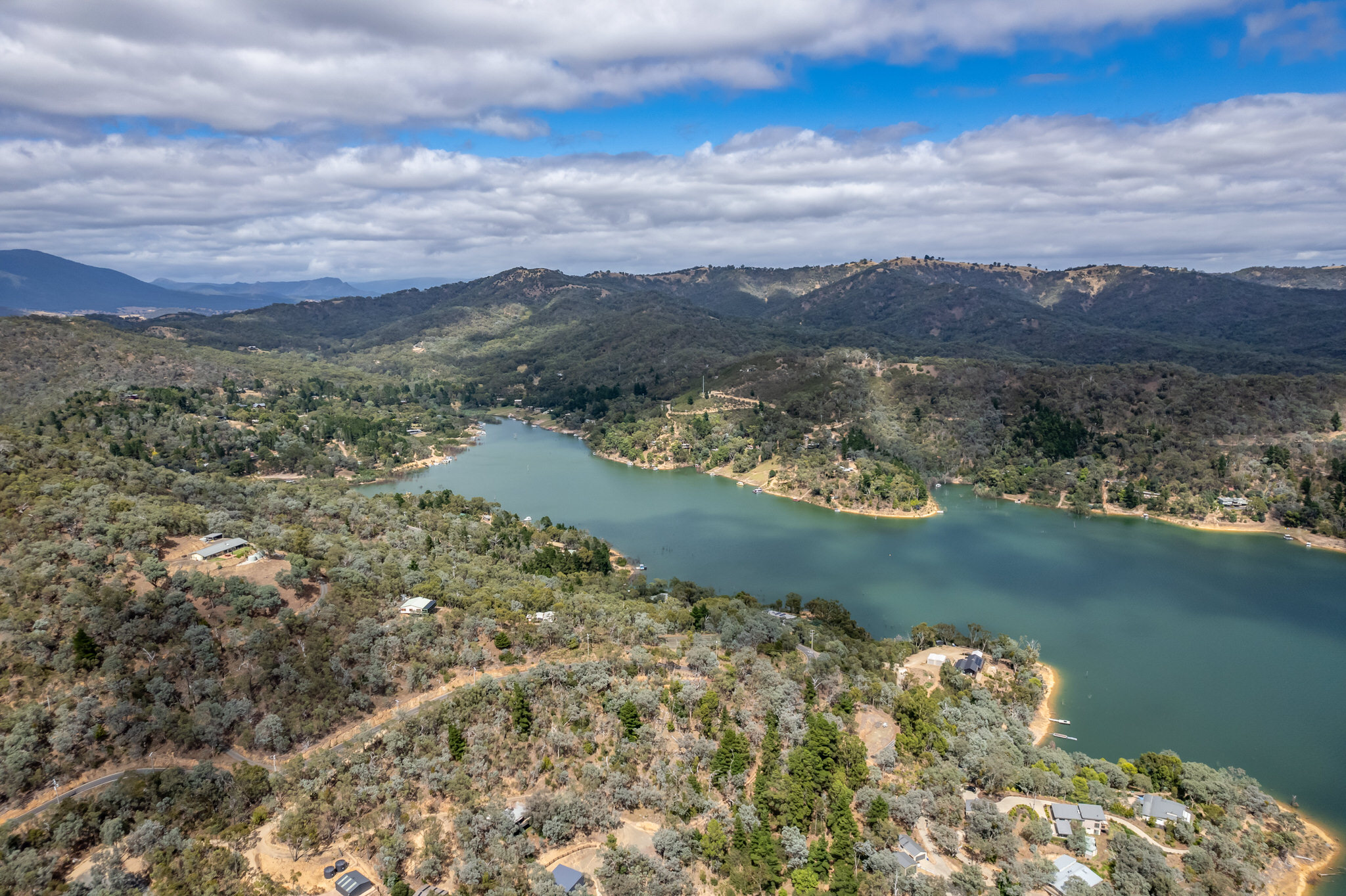
Lake Eildon was built to store water for irrigation across northern Victoria. Flooding the valleys of the Goulburn and Delatite rivers created a vast, branching lake with more shoreline than you'd ever walk in a lifetime.
Today it's the heart of the region — boats, houseboats, campgrounds and quiet bays, ringed by national park and the towns that grew up around the water.
Safe for swimming
No sharks, no crocodiles, no jellyfish. Just clean fresh water. There's a 5-knot speed limit within 50 metres of the shore, so the swimming bays stay calm.
Built twice, and named for a Scottish range
The naming
Mrs Thom named the run “Eildon” after the Eildon Hills of the Scottish Borders — the name stuck to the river, the dam and the lake.
Sugarloaf Reservoir
The original dam held about 306,000 ML — useful, but not enough for the irrigation the valley needed.
The current dam
Utah Construction and ~4,000 workers built the wall we know today, housed in 300 prefabricated English cottages in 14 styles.
When the current dam filled in 1956, it drowned the gold-rush town of Darlingford — seven hotels and all. In the deepest droughts, the old foundations still surface from the mud.
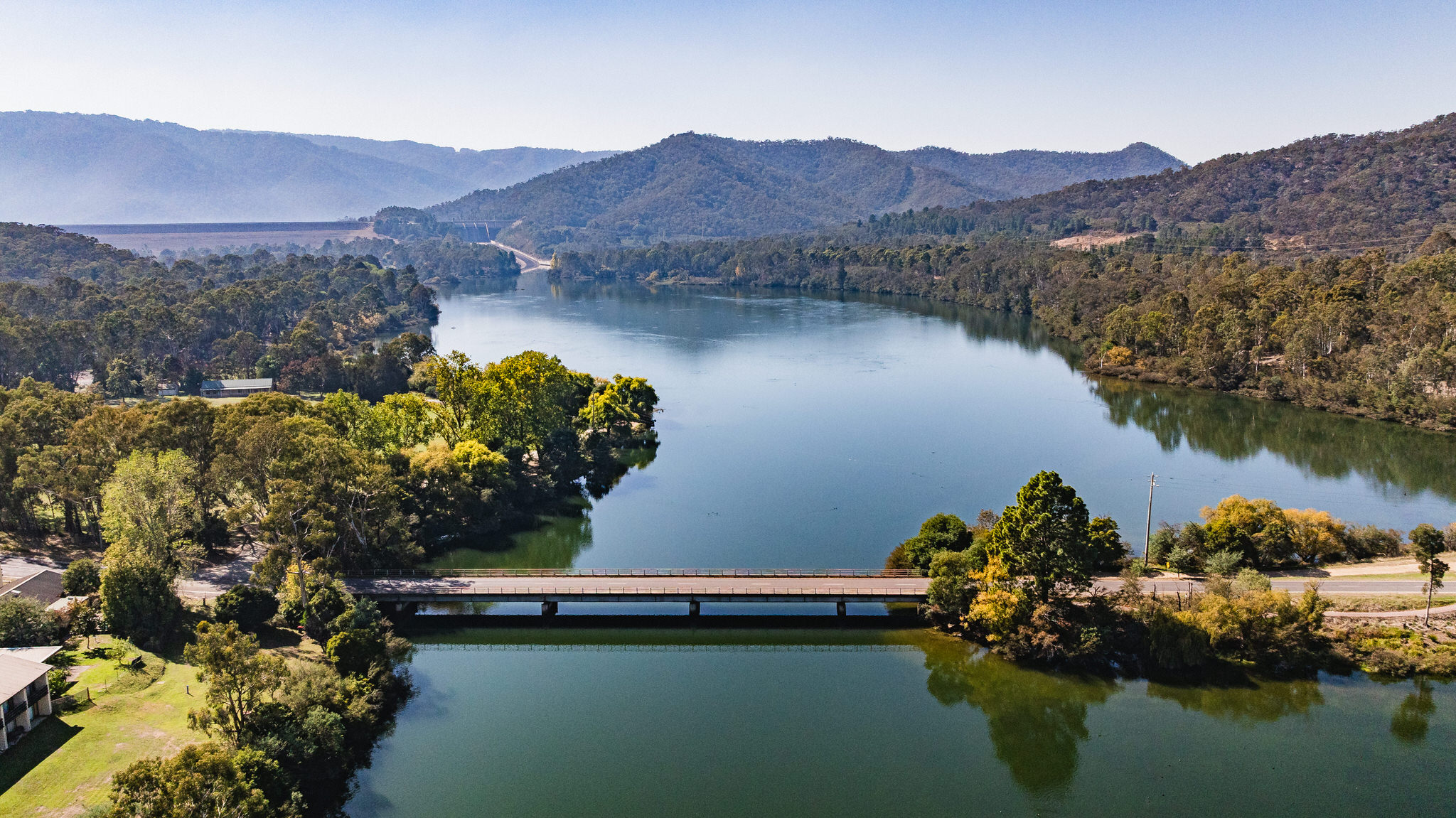
A trophy trout fishery below the wall
The Eildon Pondage is the regulating storage below the dam. Stocked in 2019 with seven tonnes of fish — around 2,000 trophy trout — it's one of the most reliable shore-based casts in the state.
Plan a fish →