History & Heritage
From ancient lands to engineering marvels
Traditional Owners
We acknowledge the Taungurung people as the Traditional Owners of the lands and waterways that make up the Lake Eildon region. The Taungurung have lived in this area for thousands of years, and their deep connection to Country continues today.
We pay our respects to Taungurung Elders past, present, and emerging, and acknowledge their continuing connection to land, waters, and culture.
The Gold Rush Era
The discovery of gold in the 1850s transformed the Lake Eildon region. Thousands of prospectors flocked to the area, establishing townships and mining settlements throughout the valleys and hills.
Towns like Jamieson became bustling hubs of activity, with hotels, stores, and services catering to the mining community. At its peak, Jamieson boasted seven hotels serving the miners who worked the goldfields.
Many of the region's towns retain their gold rush heritage today, with historic buildings, mining relics, and opportunities for recreational fossicking.

The Lost Town of Darlingford
"Beneath the waters of Lake Eildon lies the remains of a forgotten town..."
Before Lake Eildon existed in its current form, the township of Darlingford stood in what is now the lake bed. Established during the gold rush era of the 1860s, Darlingford was a thriving community that serviced the surrounding mining operations.
At its peak, Darlingford had seven hotels, numerous stores, a post office, and a school. The town was home to hundreds of residents who made their living from the goldfields or supporting the mining community.
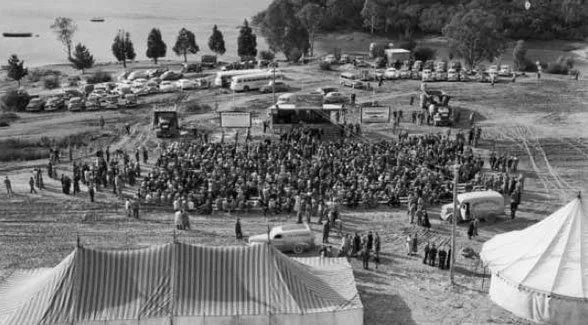
When construction of the enlarged Eildon Dam was completed in 1956, Darlingford was completely flooded. The town's buildings were demolished or left to be submerged, and residents were relocated to higher ground.
During periods of extreme drought, remnants of the old township occasionally become visible, offering a haunting glimpse into the past. Stone foundations, old fence lines, and the outlines of streets can sometimes be seen when water levels drop significantly—though this has become increasingly rare as dam management practices have evolved.
Building the Dam
The Original Sugarloaf Reservoir
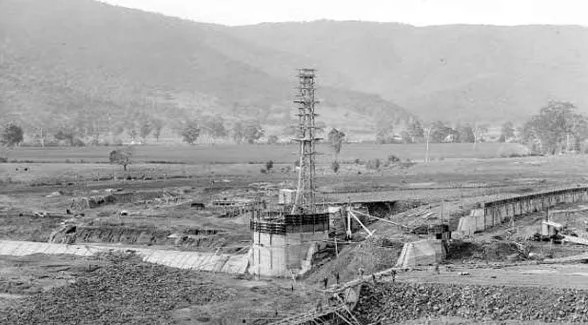
The first dam at this location was the Sugarloaf Reservoir, constructed between 1915 and 1929. This original structure had a capacity of only about 306,000 megalitres—approximately 10% of the current dam's capacity. As Victoria's population grew and irrigation demands increased, a larger dam was needed.
The Current Eildon Dam (1951-1956)
Construction of the current dam began in 1951 and was completed in 1956 by Utah Construction Company. It was one of the largest construction projects in Australia at the time.
The Workers' Township
A temporary township was established to house the construction workers. Three hundred permanent houses were pre-fabricated in England and shipped to Australia. These houses were built in 14 different architectural styles to create variety and a sense of community. Many of these distinctive homes still stand in Eildon today, forming part of the town's unique character.
Notable Water Level Events

Millennium Drought
During the worst of the Millennium Drought, Lake Eildon dropped to just 5.3% capacity—the lowest level since the dam was completed. Boat ramps became unusable, and remnants of old Darlingford briefly became visible.
First Time Full Since 1994
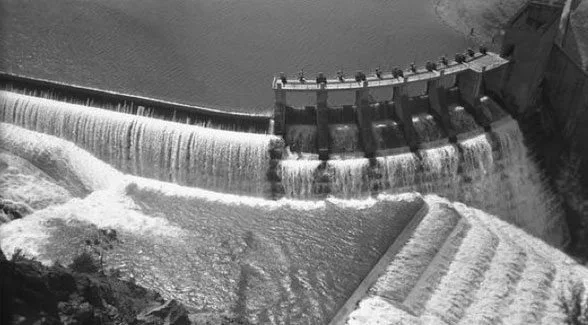
Following exceptional rainfall, Lake Eildon reached 100.3% capacity—the first time the lake had been completely full in 28 years. The spillway operated for the first time in decades, creating spectacular water releases.